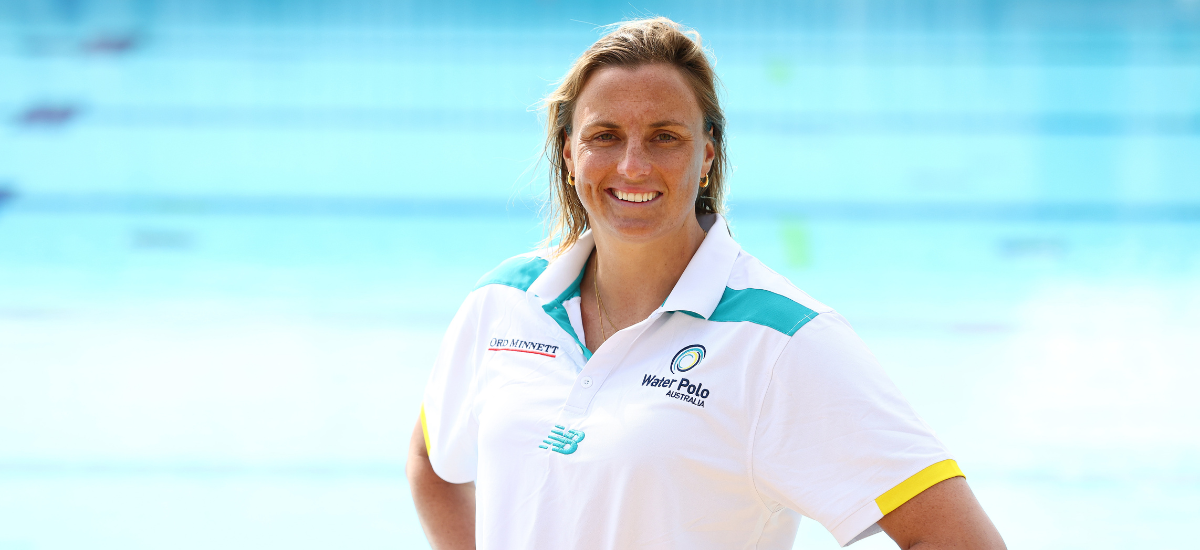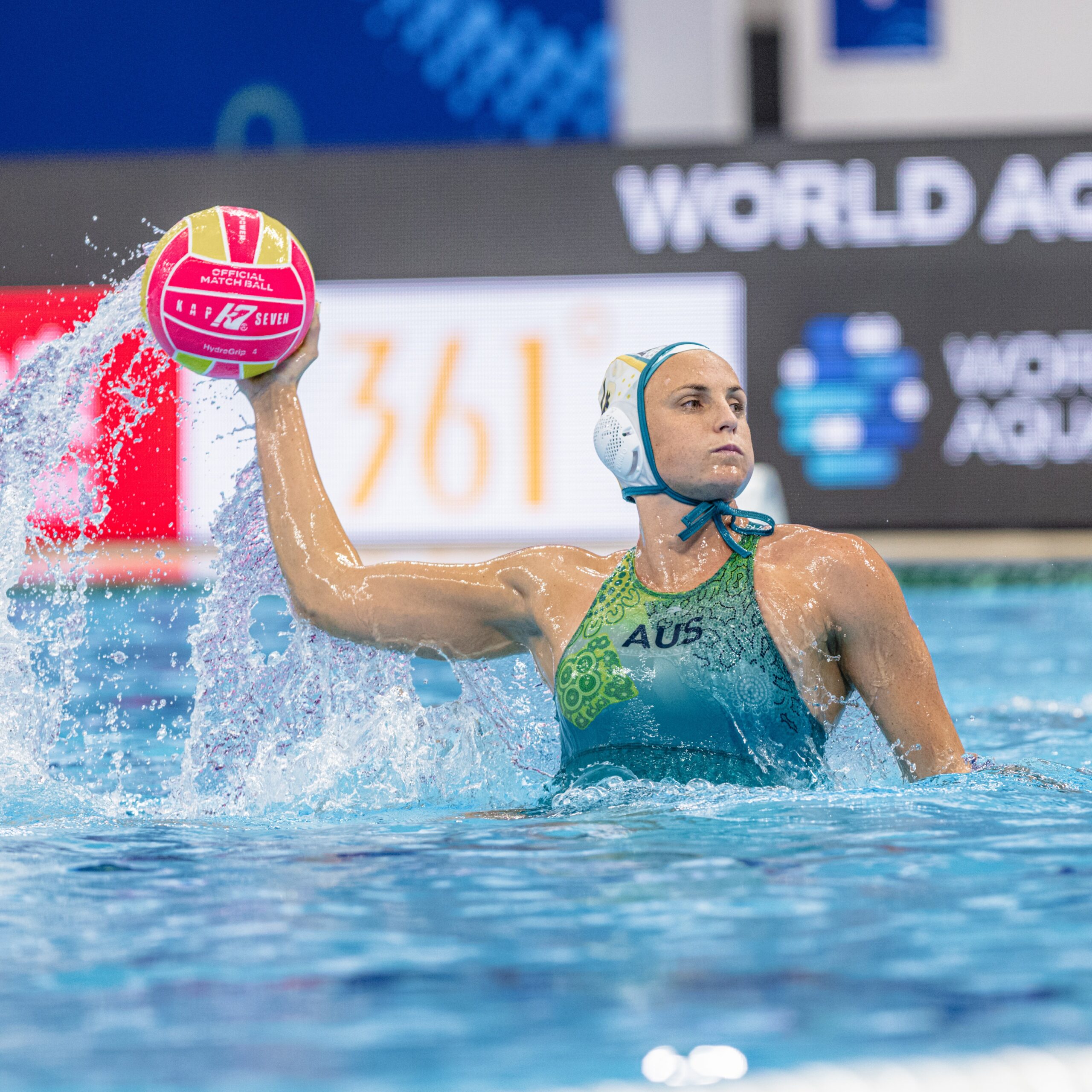
For Hayley Ballesty, she’s forging her own path as an elite athlete with an aspiring career based on her passion for the environment.
The Ord Minnett Aussie Stingers player is in her final year of a Bachelor of Landscape Architecture (Honours) at UNSW, seven years after she first set foot in a university classroom.
She’s also become the Water Polo Australia Alumni Coordinator, the captain of the UNSW Wests Killer Whales women’s team in the Australian Waterpolo League (AWL) and counting down the days until she plays in her home city of Sydney at the 2026 World Aquatics Water Polo World Cup Finals.
Busy is the word that comes to mind, but it’s exactly the kind of life she’s built that she’s excited to watch unfold on her own terms.
Ballesty’s path to Landscape Architecture wasn’t direct. She left school and headed to Arizona State University, where she began studying city planning with a minor in sustainability. It was there she began to understand where her real interests lay.
“I quickly worked out that I was more interested in the environmental side of sustainability and city planning rather than the policy,” she said.
“I wanted more of a hands-on sort of approach to environmental and ecological systems.”
Returning to Australia, she landed at UNSW. She was drawn by the degree’s unique position at the intersection of design and environmental science and their Elite Athlete Program.
“I cannot recommend it enough – I tell my team at NSWIS all the time. Helen Bryson is a legend, and her team is amazing. She’s probably the only reason why I’ve gotten to my last year of this degree.”
It’s high praise for a program that’s had to work hard to accommodate one of the country’s more demanding degrees. Landscape Architecture at UNSW takes only 40 students per year and follows a strict linear structure with no flexibility to swap subjects around training blocks or overseas stints.
“It’s very set in stone and you have to follow that pathway,” Ballesty said.
“But the Elite Athlete Program team has been amazing. They’ve worked overtime to make it as accessible to me as possible while playing elite water polo. I don’t know if I would’ve gone into the last year of this degree without them.”
While she’s had to juggling pursuing a professional career in water polo alongside her study, Ballesty is candid when it comes to the lessons learnt.
“This is going to sound so cheesy, but there’s not a timeline on you chasing your dreams,” she said.
When her first-year cohort graduated, Ballesty was only halfway through her own degree.
“It did stress me out a little bit but now looking at where I am at the finish line, I did it my own way and my own journey, and that’s a really important life lesson. Everyone’s journey, no matter if it’s sport or career, is going to look different.”
Beyond the pool and study, Ballesty has taken on a role that keeps her deeply embedded in the water polo community. As Water Polo Australia’s Alumni Coordinator, she’s been busy in the lead-up to the World Cup Finals, working to reconnect the extended Ord Minnett Aussie Stingers and Aussie Sharks family with the sport’s biggest event on Australian soil.
“At the moment there’s a lot of focus around getting alumni engagement up, particularly as we come into the World Cup Finals in Sydney.”
“Many of the alumni group are so interested and want to be involved, want to be there, and want to show their support however they can.”
For Ballesty, the 2026 World Aquatic Water Polo World Cup Finals arriving in Sydney is personal.
“Sydney’s my hometown, and I’ve never played for Australia in Sydney,” she said.
“This is the first time that my more extended family, like my nan for example, my friends, are able to watch me play. Representing my country is such a privilege and such an honour and it’s going to be awesome. They don’t have to get up at 3am to watch me play. They’ve got prime time viewing to be able to come and watch.”
For athletes figuring out how to make sport and study work simultaneously, Ballesty has a clear message: use every resource available to you, and don’t stay silent about what you need.
“Use your support network. There are so many great support people out there, and so many people in your corner,” she said.
She was initially daunted by the prospect of an honours degree, but openness with coaches, performance staff, and university support teams made the difference.
“You’re not going to get support if you don’t tell people where you’re at.”
With the finish line in sight, we look forward to watching Ballesty continue to make an impact in and out of the pool.