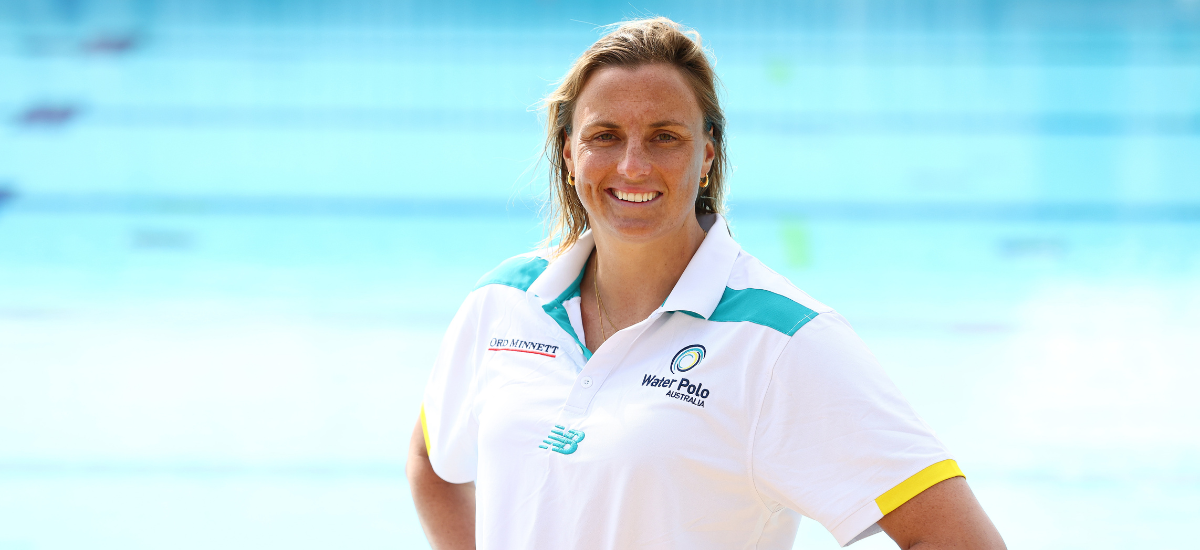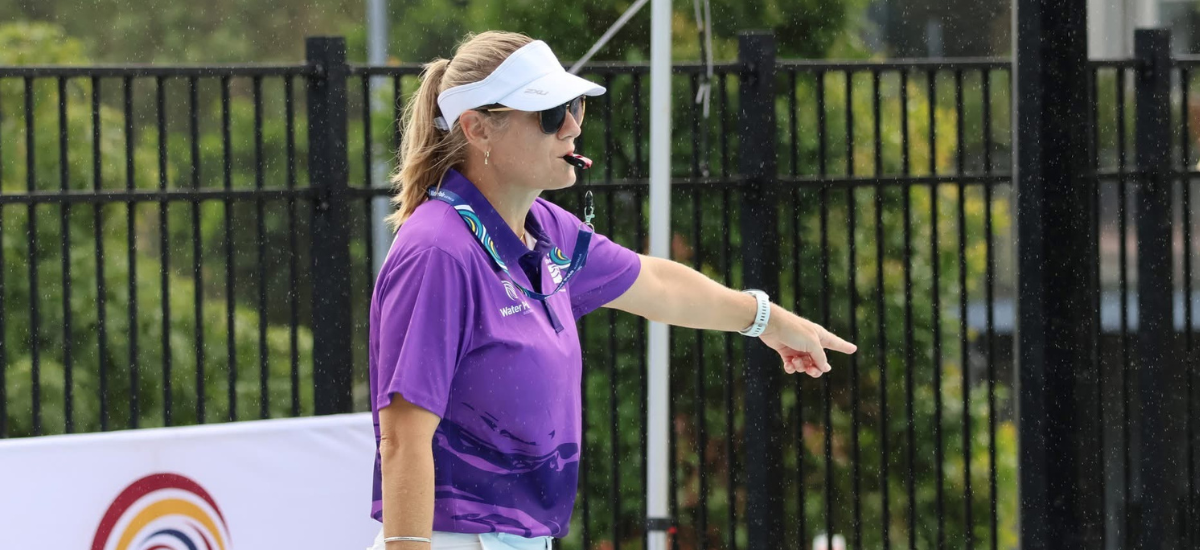
For Libby Magann, refereeing in the Australian Waterpolo League (AWL) is an extension of a lifelong connection to the game.
With more than 30 years involved in water polo, Magann has long been a familiar face around the pool. From playing and coaching to volunteering countless hours to support junior participation in her local community and even being the Secretary of the Tamworth Water Polo Association, stepping into refereeing felt like a natural progression.
Her move into officiating came from a timely nudge while already deeply embedded in the sport. A suggestion to take part in the WPNSW Referee Mentor Program at the U12s Festival in Orange proved to be the catalyst, allowing her to gain experience outside of Tamworth while her sons competed at the tournament.
“I left that weekend with my community-level accreditation and the confidence to do more local games. It all really started there,” Magann said.
Refereeing is also something of a family tradition. Magann’s father officiated rugby union, her sister referees water polo on the Central Coast and her eldest son is now a community-level referee. Together, that shared involvement has strengthened her connection to the sport and reinforced her desire to give back at a grassroots level.
“I love being able to make a difference in our local community. Improving the standard of refereeing, helping junior referees who take an interest and seeing players enjoy the game is really rewarding,” she said.
That sense of contribution carries through to her role in the AWL, which Magann describes as a high-performance environment similar to playing at the elite level.
“In a way, refereeing in the AWL is like playing in the AWL. You’re officiating athletes performing at the highest level of the game in Australia, and there’s a lot of preparation that goes into being ready for that.”
Having previously played in the AWL for Sydney University and Hunter Hurricanes, refereeing has become Magann’s way of staying involved at the top level of the sport. She relishes the opportunity to observe team tactics and strategies unfold while continuing to develop her own officiating skills.
Match day preparation begins well before the first whistle. Magann prioritises downtime ahead of games to reset mentally, sometimes including a swim before travelling to the venue. Arriving early allows time to connect with her fellow referee and delegate, ensure the pool is set up correctly, greet coaches and familiarise herself with the venue layout before stepping onto the pool deck.
Her first AWL matches remain especially memorable. Close, physical men’s games provided a steep learning curve, reinforcing the need for preparation, confidence and continual improvement.
“I didn’t want to repeat that experience, so it made me work harder to be better,” she said.
While the pressure of elite refereeing is real, the rewards often come in the quieter moments – a thank you from parents or players, positive feedback from colleagues or being requested to officiate a particular match.
Magann hopes more people gain a deeper appreciation of what referees do beyond game day.
“Referees don’t just turn up each week. We train, review games, read rules, complete learning modules and talk through scenarios with colleagues.”
Her advice to anyone considering becoming a referee is simple.
“Give it a go,” she said. “Know the rules, be confident, be respectful and don’t be afraid to ask questions along the way.”
Officials are the reason our players can compete, no matter the level. Find out more about becoming a referee with Water Polo Australia here.